Japan's economy shrinks in Q3 as rain and prices hit spending
Japan's real GDP fell 0.02% in July–September 2026, an annualised 0.1%, the Cabinet Office said on 16 November. It was the first contraction in four quarters. Consumer spending fell 0.3% after record rain and high prices, and costlier energy imports cut 0.6 point from growth. Business investment rose 1.6%, and economists still expect a Bank of Japan rate rise in December.
Japan's economy shrank slightly in the third quarter of 2026. Real gross domestic product fell 0.02% in July–September from the previous three months, an annualised 0.1% decline, according to the Cabinet Office's first preliminary estimate published on Monday, 16 November. It was the first contraction in four quarters. Household spending fell for a second straight quarter, and higher energy import costs dragged on net exports.
The result missed forecasts. A Reuters poll had expected annualised growth of 0.3%, while Bloomberg's survey and the private-sector consensus compiled by QUICK both pointed to 0.2%. Growth in April–June was revised to 0.4% quarter on quarter, or about 1.7% annualised, Reuters and Nikkei Asia reported.
Why did Japan's economy shrink?
Private consumption makes up more than half of Japan's output, and it fell 0.3% in the quarter, slightly worse than the 0.2% decline economists expected. Cabinet Office figures show it fell by the same amount in April–June.
Weather was a major factor. Tokyo had rain on 37 consecutive days from late August to early October, a record according to the Japan Meteorological Agency, Bloomberg reported via The Japan Times. In its latest Outlook Report, the Bank of Japan (BOJ) also said household spending had been held back by "weather conditions such as typhoons, torrential rains, and prolonged rainfall." Nikkei reported weaker purchases of everyday goods such as toothbrushes, and soft clothing sales as the weather stayed poor.
Prices weighed on spending too. Reuters said households were still under pressure from high living costs despite rising wages, and that demand for cars and air conditioners fell back after a temporary boost in the previous quarter from tax and regulatory changes. The BOJ has noted that pensioners in particular have become more frugal.
What role did energy imports play?
Trade subtracted 0.6 percentage point from quarterly growth, more than the 0.4 point economists had expected. The Cabinet Office tables show exports of goods and services slipped 0.2% while imports rose 2.5%.
Reuters said imports jumped as oil and other energy purchases recovered after Japan spread its supply sources in response to the war in the Middle East. Bloomberg added that the weak yen kept making imports more expensive, outweighing any gain from exports. Because imports are subtracted in the GDP calculation, that rise pulled the headline figure into negative territory.
Were there any bright spots?
Business investment rose 1.6% in the quarter, slightly above the 1.5% forecast and an annualised pace of nearly 7%. Analysts linked the gain to spending on labour-saving technology and artificial intelligence. The BOJ's Tankan survey on 1 October showed large firms planning to raise fixed investment by 11.3% in the fiscal year to March 2027, The Japan Times reported.
Overall, domestic demand added 0.6 percentage point to quarterly growth. According to the Cabinet Office, public demand rose 1.8%, mostly because of a large contribution from public inventories, while public works investment fell 1.1%. Housing investment fell 1.1%.
Compared with a year earlier, the economy grew 1.1%, its strongest annual rate since the second quarter of 2025, CNBC reported. Capital Economics noted that this was largely because of a low base in the third quarter of 2025. Nominal GDP, which is not adjusted for inflation and is closer to what households and companies see, rose 0.4% on the quarter, or 1.6% annualised, according to the Yomiuri Shimbun. Real employee compensation rose 0.3% on the quarter.
Will the Bank of Japan still raise rates in December?
Most economists quoted after the release think the BOJ will still raise rates. The central bank raised its policy rate in June and September. Last month it said its 2% underlying inflation target had been met for the first time in 13 years, and core inflation reached 2.1% in September, CNBC reported. LSEG data cited by CNBC put the probability of a 25-basis-point rise at the December meeting at about 76%.
"While growth was indeed negative this time, there is no need to be overly pessimistic about the result," Kento Minami, senior economist at Daiwa Securities, told Reuters. "My impression is that moderate growth is probably continuing." He said firm domestic price pressures and higher global interest rates left little room for the BOJ to turn more cautious.
Marcel Thieliant, head of Asia-Pacific at Capital Economics, went further. "It looks increasingly likely that the Bank will have to tighten policy more aggressively than we've been anticipating as inflation is about to surge," he told CNBC.
Masato Koike of Sompo Institute Plus was more cautious about households. "Strong wage growth should support consumption, but higher prices linked to Middle East tensions will continue to squeeze household purchasing power," he told Reuters.
How did markets react?
The Nikkei 225 fell after the release, down about 0.6% to 0.8% in Monday morning trade, according to CNBC and NDTV Profit. The benchmark 10-year Japanese government bond yield was around 2.885%, and the yen weakened slightly to about 159.8 per US dollar, CNBC said.
What comes next?
The Cabinet Office will publish a revised second preliminary estimate for the quarter in early December, which can change the result. A monthly survey of 37 economists by the Japan Center for Economic Research, cited by Reuters, expects growth of 0.89% in fiscal 2026 and 1.02% in fiscal 2027. That points to modest growth rather than a recession.
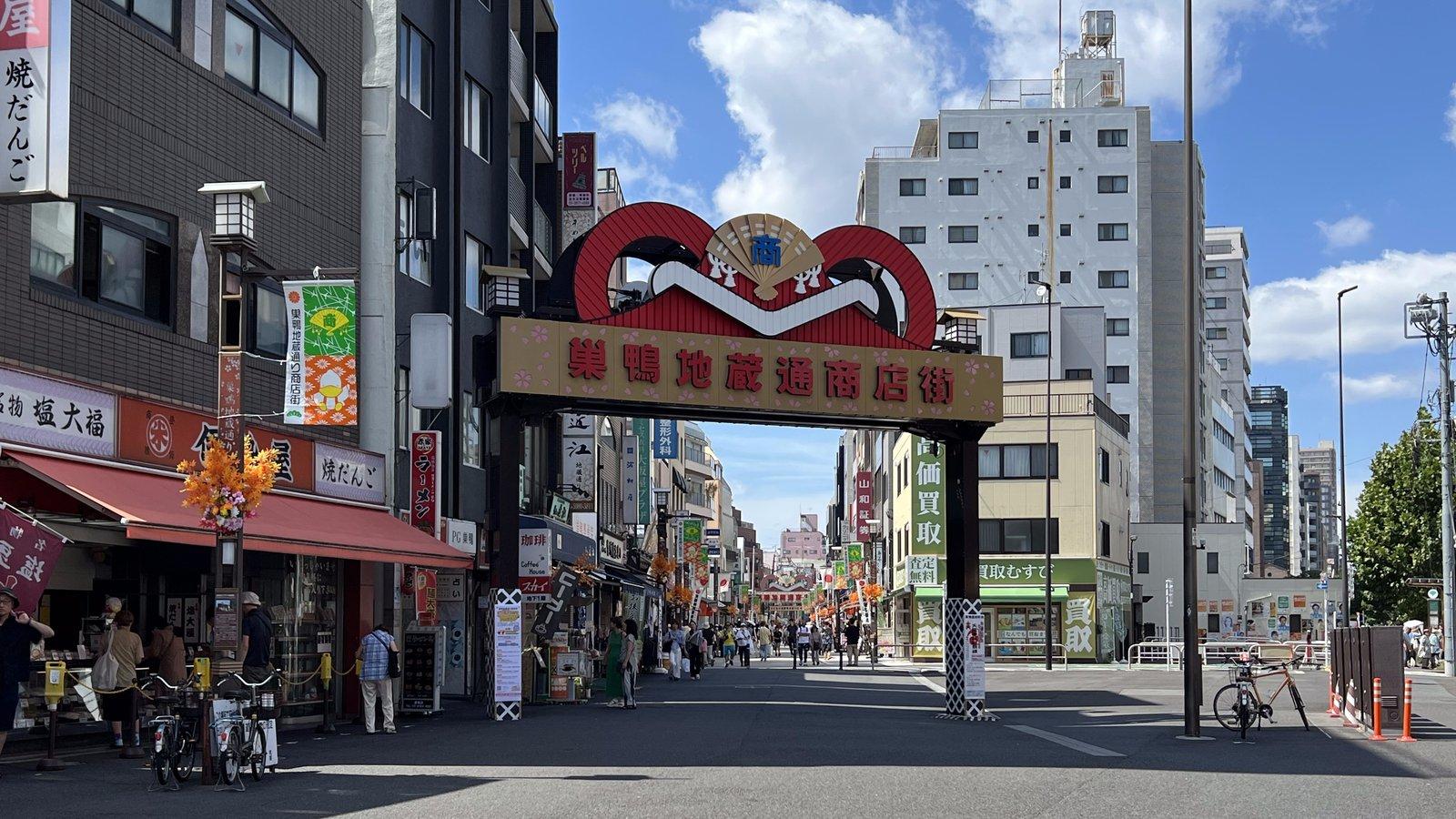
Image: Image: Asanagi, CC0 1.0 public domain dedication (https://creativecommons.org/publicdomain/zero/1.0/), via Wikimedia Commons (https://commons.wikimedia.org/wiki/File:Sugamojizou-dori_Shopping_Center_east_end_2025-09-07.jpg) — September 2025 file photo of Sugamo Jizo-dori shopping street, Tokyo; resized
About this article: prepared by The Daily Context editorial desk using automated, source-based reporting from the publications linked below. No reporter was on the ground.
Sources
- Cabinet Office (ESRI), Quarterly Estimates of GDP for July–September 2026, First Preliminary Estimates, summary tables (16 November 2026): https://www.esri.cao.go.jp/en/sna/data/sokuhou/files/2026/qe263/pdf/gaiyou2631_e.pdf
- CNA / Reuters, "Japan's economy unexpectedly shrinks as inflation squeezes households" (16 November 2026): https://www.channelnewsasia.com/business/japans-economy-unexpectedly-shrinks-in-july-september-consumption-falters-6553696
- The Japan Times / Bloomberg, "Japan's economy shrinks as bad weather weighs on consumption" (16 November 2026): https://www.japantimes.co.jp/business/2026/11/16/economy/japan-gdp-july-september-shrink/
- CNBC, "Japan's economy unexpectedly contracts in third-quarter as elevated energy costs bite" (16 November 2026): https://www.cnbc.com/2026/11/16/japan-q3-gdp-energy-oil-prices.html
- Nikkei Asia, "Japan's Q3 GDP drops an annualized 0.1%, below market expectations" (16 November 2026): https://asia.nikkei.com/economy/japan-s-q3-gdp-drops-an-annualized-0.1-below-market-expectations
- Nikkei (Japanese), July–September real GDP down 0.1% annualised (16 November 2026): https://www.nikkei.com/article/DGXZQOUA138F50T11C26A1000000/
- Yomiuri Shimbun via Yahoo! News Japan, July–September real GDP (16 November 2026): https://news.yahoo.co.jp/articles/b35ae77686c1b890e6ae59e227e65661a730c042
- NDTV Profit, "Asian Markets Today: Nikkei leads losses as Japan GDP contracts" (16 November 2026): https://www.ndtvprofit.com/markets/asian-markets-today-november-16-nikkei-leads-losses-as-japan-q3-gdp-contracts-nvidia-earnings-wall-street-kospi-asx-200-dow-nasdaq-ai-tech-stocks-12331427
- Bank of Japan, Outlook for Economic Activity and Prices (October 2026): https://www.boj.or.jp/en/mopo/outlook/gor2610b.pdf
Kabeer Ahmad
Kabeer Ahmad is the founder and editor of The Daily Context. He oversees the site's source-based coverage of world affairs, technology, business, entertainment, lifestyle and sports, and is responsible for its editorial standards, sourcing and corrections.