Indonesia's Vice President Gibran formally resigns: what happens next
Indonesian Vice President Gibran Rakabuming Raka formally resigned on Thursday 12 November, handing his letter to the People's Consultative Assembly (MPR) after court rulings undermined the school documents behind his 2024 candidacy. President Prabowo Subianto must now nominate two candidates, and the assembly has up to 60 days to elect a successor.
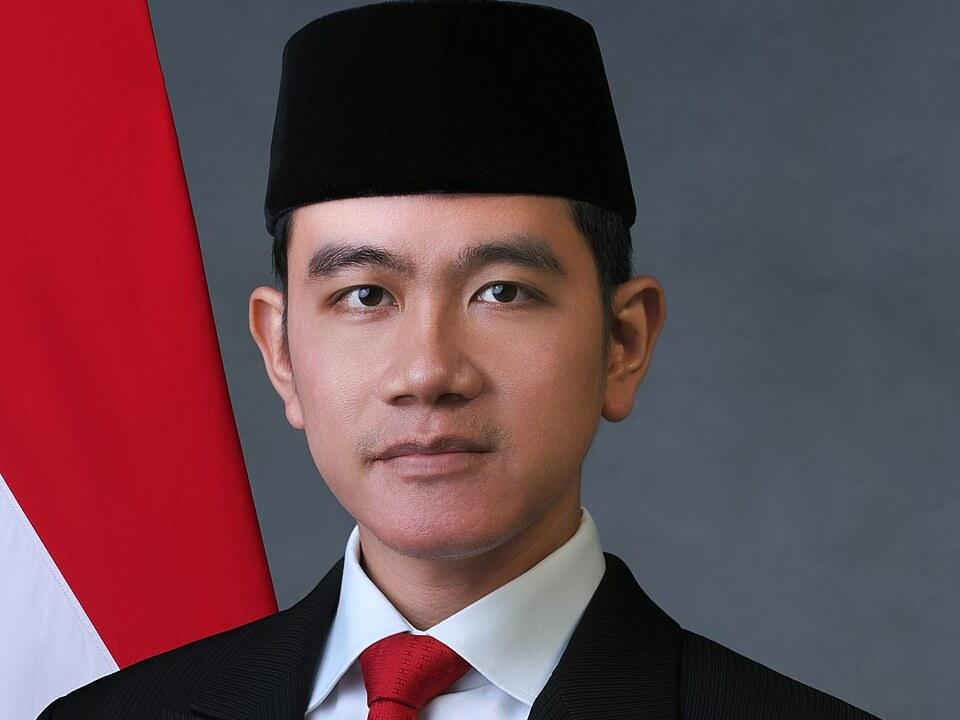
Gibran Rakabuming Raka has formally resigned as Indonesia's vice president. On Thursday 12 November he handed a resignation letter in person to the leaders of the People's Consultative Assembly (MPR), the body that under the constitution must now choose his replacement. The move ends two days of uncertainty after he first told President Prabowo Subianto he intended to step down, and it halts a parliamentary motion that could have led to his impeachment over questions about his school qualifications.
MPR Speaker Ahmad Muzani told reporters that Gibran asked the assembly to process the resignation as quickly as possible and that the same letter had also been given to Prabowo. "He did not say much. He explained that the purpose of his visit was to submit his resignation letter and request that the Assembly immediately process his resignation," Muzani said, according to the state news agency ANTARA. Gibran, 39, made no comment to reporters as he left.
What happened on Thursday?
According to BBC News Indonesia, Gibran arrived at the parliamentary complex in Senayan, central Jakarta, at about 11:15 a.m. Western Indonesian Time (WIB), handed over the letter at about 11:20 and left at about 11:36. Earlier that morning he had met Prabowo at the presidential palace, a meeting confirmed by Deputy House Speaker Sufmi Dasco Ahmad, who said the vice president would go to Senayan afterwards.
ANTARA reported that the meeting with MPR leaders lasted around 20 minutes and that Gibran did not explain his reasons. Muzani said the MPR leadership would meet promptly to follow up, followed by a joint meeting with the leaders of the assembly's party factions and the group representing the Regional Representatives Council (DPD) to decide the next steps. BBC News Indonesia reported that the joint meeting was planned for midday on Friday 13 November.
The formal handover followed reports on Wednesday evening that Gibran had already given his letter to Prabowo. Budi Arie Setiadi, chairman of Projo, a volunteer group that backs Gibran's father, former President Joko Widodo, confirmed the decision on Wednesday. Bloomberg, citing people familiar with the matter, reported that Prabowo had accepted the resignation; the palace did not publicly confirm that before the letter reached the assembly.
Why did Gibran resign?
The resignation stems from a dispute over whether Gibran met the legal education requirement to run in the February 2024 election. Indonesian law requires presidential and vice-presidential candidates to have completed senior high school or an equivalent. Gibran studied abroad, in Singapore and Australia, and in 2019 the education ministry issued a certificate recognising his overseas schooling as equivalent to an Indonesian senior high school qualification.
Two court rulings went against him this autumn. In early October, the Constitutional Court dismissed a petition on legal standing grounds but said it had found no convincing evidence that he held a qualifying foreign diploma. Then, on 30 October, the Supreme Court declared the 2019 equivalency certificate void and ordered the ministry to revoke it; its full judgment was published on 10 November. Neither ruling removed him from office, but together they gave lawmakers grounds to argue he no longer met the requirements for the job. Our earlier report explains the rulings in more detail: [Indonesia's Vice President Gibran offers to resign over diploma rulings](https://www.thedailycontext.com/article/indonesia-vice-president-gibran-resignation-offer-diploma-rulings-november-2026).
On Tuesday 10 November, after a meeting with Prabowo that lasted about two and a half hours, Gibran said he did not want the situation "to turn into a prolonged political controversy" and that the president had advised him to keep fighting in court to prove his records, as reported by The Jakarta Post. Coordinating Law Minister Yusril Ihza Mahendra later said the rulings were final, and Bloomberg reported that the government's communications chief disputed Gibran's account of that advice.
What happened to the impeachment motion?
On Wednesday 11 November, at least 120 members of the House of Representatives (DPR) submitted a proposal to use the House's "right to express an opinion", the first step in Indonesia's constitutional process for removing a president or vice president. Bloomberg reported that the signatories came from all eight parliamentary factions, including 11 members of Prabowo's own Gerindra party.
The House had scheduled a plenary session for 2 p.m. WIB on Thursday to discuss the proposal. ANTARA confirmed that the session was cancelled after Gibran's letter was submitted. Muhammad Khozin, a member of the House's Commission II and one of the lawmakers behind the motion, said he respected the decision and that the proposal was no longer relevant and should not proceed.
Removal would have been a long process: a two-thirds House vote to refer the matter, a Constitutional Court ruling within 90 days and then a vote in the MPR. Resignation avoids all of that.
How will Indonesia choose a new vice president?
Under Article 8(2) of Indonesia's 1945 constitution, a vice-presidential vacancy does not trigger a new election. Instead:
- The MPR formally establishes that the office is vacant and writes to the president asking for two nominees, with their supporting documents.
- Prabowo has 14 days from the MPR's request to submit two candidates, according to Muzani as quoted by ANTARA.
- The MPR must hold a plenary session to elect one of the two within 60 days of the vacancy. Under the 2014 law on legislative bodies, both nominees must declare at the session that they are ready to serve, and the candidate with the most votes wins. A tie triggers one re-run; if the result is still tied, the president chooses.
- The winner is sworn in at the same session and serves the rest of the current term, which ends in 2029.
Government continues as normal in the meantime. BBC News Indonesia noted that no other official automatically becomes acting vice president.
No candidates have been formally named. Bloomberg reported that the process gives Prabowo a pivotal role, with consequences for the balance of power among the parties in his broad governing coalition. Laura Schwartz, a senior Asia analyst at the risk consultancy Verisk Maplecroft, told Bloomberg that coalition heavyweights were likely to "scramble for influence" over the choice.
How did Jokowi and markets react?
Gibran's father, Joko Widodo, who served as president from 2014 to 2024, called the resignation a normal part of politics. "I have told Gibran that positions are temporary," he told reporters in Solo, Central Java, according to ANTARA, adding that he would keep supporting Prabowo's government and its programmes for the public.
Analysts see the departure as a turning point in the relationship between Prabowo and Jokowi, whose alliance helped Prabowo win in 2024 after two failed presidential bids. Schwartz told Bloomberg that the resignation "caps a series of demotions and removals of key Jokowi allies". Political analyst Arifki Chaniago told Kompas that Prabowo would gain more room to consolidate power ahead of the 2029 election.
The rupiah opened 0.33% weaker at 18,209 per US dollar on Thursday morning, according to Investortrust, which also cited disappointing MSCI index reviews and US interest-rate signals as pressures. Bloomberg noted that the rupiah has fallen about 8% against the dollar this year, making it Asia's worst-performing currency, and that MSCI has warned Indonesia could be downgraded from emerging-market status unless "investability" concerns are addressed. Economists quoted by ANTARA said markets would be more worried if the political turbulence dragged on.
Has an Indonesian vice president resigned before?
Yes, once. BBC News Indonesia notes that Gibran is the second vice president in the country's history to resign. The first was Mohammad Hatta, a founding father of the republic, who stepped down with effect from 1 December 1956 after political differences with President Sukarno.
What remains uncertain?
Several questions are still open: when the MPR will formally declare the vacancy, whom Prabowo will nominate, and whether Gibran will continue any legal effort over his school records now that he has left office. It is also unclear how the resignation will affect wider unrest. Bloomberg reported student and civil society protests in several cities this week, including clashes in Yogyakarta where police detained 154 people. Indonesia is the world's fourth most populous country and Southeast Asia's largest economy, so the choice of its next vice president will be closely watched at home and abroad.
Image: Photo: Darwis Triadi and Ministry of State Secretariat of Indonesia, public domain, via Wikimedia Commons (https://commons.wikimedia.org/wiki/File:Gibran_Rakabuming_2024_official_portrait.jpg) — official vice-presidential portrait from October 2024, cropped; not taken during the resignation
About this article: prepared by The Daily Context editorial desk using automated, source-based reporting from the publications linked below. No reporter was on the ground.
Sources
- ANTARA, Gibran says little when submitting resignation letter: https://en.antaranews.com/news/441991/gibran-says-little-when-submitting-resignation-letter-mpr-speaker
- ANTARA, Gibran officially resigns, HMP plenary meeting canceled: https://en.antaranews.com/news/442003/gibran-officially-resigns-hmp-plenary-meeting-canceled
- ANTARA, Jokowi responds to Gibran's resignation: https://en.antaranews.com/news/441995/jokowi-responds-to-gibrans-resignation-vows-support-for-prabowo
- BBC News Indonesia (Indonesian): https://www.bbc.com/indonesia/articles/cm62pre89eego
- The Jakarta Post: https://www.thejakartapost.com/indonesia/2026/11/12/breaking-gibran-hands-resignation-letter-to-assembly
- Associated Press: https://apnews.com/article/indonesia-gibran-rakabuming-raka-resigns-abfe5e288fad3b8b26719eae634f2ee0
- Bloomberg via The Star: https://www.thestar.com.my/aseanplus/aseanplus-news/2026/11/12/prabowo-said-to-accept-indonesia-vice-president-resignation
- Investortrust: https://investortrust.id/national/122323/vice-president-gibran-meets-parliamentary-leaders-to-formalize-resignation-as-rupiah-slides-to-rp-18-209?page=english-edition
- Kompas: https://www.kompas.id/artikel/from-surakarta-jokowi-told-gibran-that-the-position-was-temporary
Kabeer Ahmad
Kabeer Ahmad is the founder and editor of The Daily Context. He oversees the site's source-based coverage of world affairs, technology, business, entertainment, lifestyle and sports, and is responsible for its editorial standards, sourcing and corrections.