CAS reinstates Senegal as Afcon 2025 champions, overturning Morocco's forfeit win
The Court of Arbitration for Sport has restored Senegal's 1-0 extra-time win in the Afcon 2025 final, ruling that the referee's decision to restart the match after Senegal's walk-off could not be reviewed. CAF says it will implement the award; Morocco's federation says it will pursue every legal avenue to challenge it.
Senegal are once again the champions of Africa. The Court of Arbitration for Sport (CAS) on Tuesday 24 November 2026 upheld the Senegalese Football Federation's (FSF) appeal over the Africa Cup of Nations 2025 final, setting aside a ruling by the Confederation of African Football (CAF) that had stripped Senegal of the title and handed it to hosts Morocco. The 1-0 extra-time result from the final in Rabat in January stands.
The unanimous decision ends, at least for now, a ten-month dispute that began on the pitch and moved through CAF's disciplinary bodies to Lausanne. CAF says it will implement the award. Morocco's federation (FRMF) says it will try to challenge it.
What did CAS decide?
According to the CAS media release, the three-member panel set aside the decision of the CAF Appeal Board and reinstated the earlier decision of the CAF Disciplinary Board. "Consequently, the result obtained at the end of the AFCON 2025 final is confirmed (1-0 for Senegal)," the court said.
CAF's own statement gave the dates of the two rulings involved: the Appeal Board decision of 17 March 2026, which had declared that Senegal forfeited the final and recorded a 3-0 win for Morocco, is set aside, and the Disciplinary Board decision of 11 February 2026 is confirmed. "Senegal has therefore been declared by CAS as the Winner" of the tournament, CAF said.
The panel was chaired by Professor Gérald Simon of France, with Professor Ulrich Haas of Germany and Professor Luigi Fumagalli of Italy as the other arbitrators. The FSF's appeal was registered on 25 March 2026, and a closed-door hearing took place at CAS headquarters in Lausanne on 8 October. CAS said the parties had not agreed to speed up the case, so it followed a standard timetable, and that proceedings were conducted in French.
Why did the panel side with Senegal?
The case turned on a long-standing principle of sports law known as the "field of play" doctrine, under which CAS generally declines to review decisions taken on the pitch by referees unless there is evidence the rules were applied arbitrarily or in bad faith.
The final itself was goalless deep into second-half stoppage time when the referee, Jean-Jacques Ngambo Ndala, awarded Morocco a penalty after a video review. Senegal's coach Pape Thiaw called his players to the touchline and several of them went to the dressing room in protest, BBC Sport reported. They returned after more than 15 minutes, Brahim Díaz's penalty was saved by Edouard Mendy, and Pape Gueye scored the winner in extra time.
Before CAS, the FSF argued that the referee's decision to restart the match in the 109th minute (90+19) and let it finish with a sporting result could not be reviewed. The FRMF countered that the doctrine did not cover the disciplinary consequences of Senegal's walk-off, that Senegal had breached Articles 82 and 84 of the Afcon regulations, which deal with teams that refuse to play or leave the pitch, and that the referee should have ended the match early. It also argued that the referee "erred in law" and acted arbitrarily.
The panel disagreed. It found that the decision to resume or stop the match "fell definitively within his sole authority", and that by blowing his whistle to restart play the referee had judged that the conditions for resuming had been met, with both teams back on the pitch and willing to continue. Because the effects of that decision were limited to the pitch, it was covered by the field-of-play doctrine. CAS said Articles 82 and 84 apply only when a team's conduct leads the referee to call off a game permanently, so they did not apply here.
The panel accepted that the referee had decided "in an atmosphere of extreme tension", but said that did not make his decision arbitrary, and that his judgment "did not appear to have been affected by factors external to the game". It also noted that the FSF, Thiaw and some players had already been sanctioned by CAF in separate disciplinary proceedings. CAS stressed that its release is an unofficial summary; the full reasoned award has been sent to the parties and will be published unless they ask for confidentiality.
How have Senegal, CAF and Morocco reacted?
The FSF said it welcomed the ruling "with deep satisfaction". "This decision affirms, above all, the triumph of sporting fairness and reaffirms a fundamental principle: the true outcome of a match is determined exclusively on the field of play," it said in a statement quoted by BBC Sport. On social media, the federation posted a picture of the January trophy celebration captioned "again and always champions of Africa".
CAF said in a short statement that it "respects the CAS Award and will take all the necessary measures to implement it".
The FRMF said it had taken note of the decision but expressed "surprise" and "protest". In its statement, reported by BBC Sport and Africa Soccer, it argued that the panel had not taken account of the most recent positions of FIFA and the International Football Association Board (IFAB) on players leaving the pitch without permission. It also complained that CAS had not acted on its request for proceedings over what it described as an improper contact between one of the arbitrators and the FSF president, Abdoulaye Fall, shortly before the ruling. Fall has "categorically" denied that any such contact took place, BBC Sport reported, and the claim has not been independently verified. The FRMF said it would "pursue all available legal avenues to challenge the decision".
Can Morocco still overturn the ruling?
Only on narrow grounds. CAS awards can be challenged before the Swiss Federal Tribunal, Switzerland's highest court, but that court reviews mainly procedural issues, such as the composition of the panel or the parties' right to be heard, rather than the merits of the case. If it were to annul the award, the case would likely be heard again at CAS by a differently composed panel, BBC Sport noted, citing the precedent of Chinese swimmer Sun Yang, whose doping ban was later reduced after a rehearing.
The episode has already changed football's rules. In April, IFAB said referees may show a red card to any player who leaves the pitch in protest at a decision, and that a team that causes a match to be abandoned will, in principle, forfeit it, BBC Sport reported.
What does it mean for Senegal and Morocco now?
For Senegal, the ruling restores a second continental title. For Morocco, which is co-hosting the 2030 World Cup and has staged several recent CAF and FIFA events, it means the 2025 tournament it hosted will officially end in a home defeat in the final. Both countries have changed coach since January and have already qualified for the 2027 Africa Cup of Nations, BBC Sport reported.
Before the verdict, Morocco captain Achraf Hakimi had written on Instagram that "what happens on the pitch should be the most important thing of all" and that Senegal "won that Africa Cup of Nations final through their performance", DW reported. Whether the FRMF goes to the Swiss courts will decide whether this is the end of the matter.
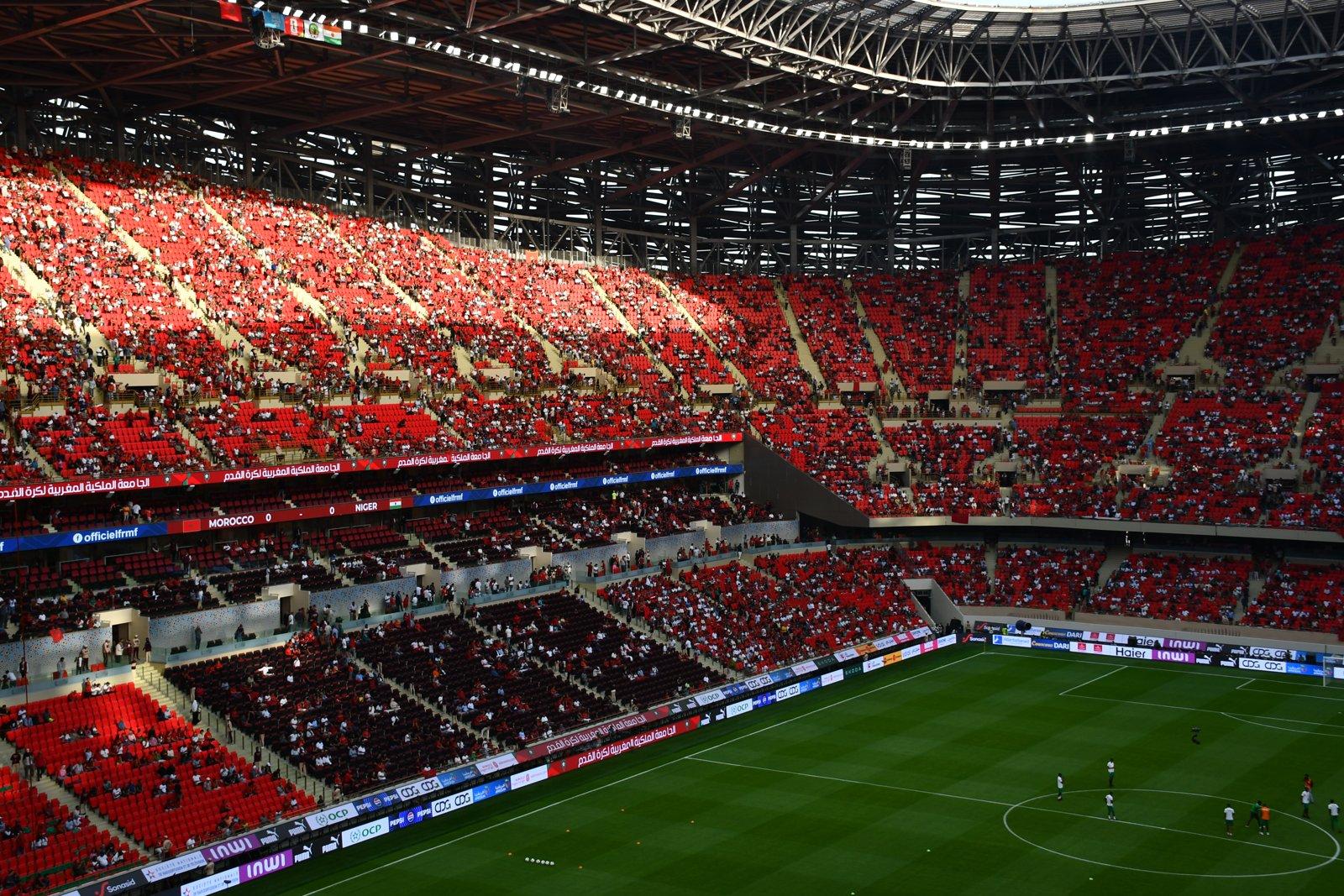
Image: File photo: the Prince Moulay Abdellah Stadium in Rabat, venue of the Afcon 2025 final, during a Morocco v Niger World Cup qualifier on 5 September 2025. It does not show the final. Image: Reda benkhadra, CC BY-SA 4.0 (https://creativecommons.org/licenses/by-sa/4.0/), via Wikimedia Commons (https://commons.wikimedia.org/wiki/File:Moulay_Abdellah_Stadium_-_interior.jpg); resized
About this article: prepared by The Daily Context editorial desk using automated, source-based reporting from the publications linked below. No reporter was on the ground.
Sources
- Court of Arbitration for Sport: Media release, CAS upholds appeal by Senegalese Football Federation (24 November 2026): https://www.tas-cas.org/generated/assets/lists/dceab111-07bc-435f-b5f9-de88eff9db72/CAS%20Media%20Release_12295_decision.pdf
- CAF: Media statement on the CAS award concerning the Afcon Morocco 2025 final (24 November 2026): https://www.cafonline.com/inside-caf/news/caf-media-statement-on-the-court-of-arbitration-for-sport-cas-award-in-the-matter-concerning-the-totalenergies-caf-africa-cup-of-nations-morocco-2025-final/
- BBC Sport: Senegal reinstated as Afcon 2025 winners by court ruling (24 November 2026): https://www.bbc.com/sport/football/articles/crn80y2l1404o
- DW: CAS reinstates Senegal as 2025 AFCON champions (24 November 2026): https://www.dw.com/en/cas-reinstates-senegal-as-2025-afcon-champions/a-80021027
- Africa Soccer: Morocco to pursue legal challenge after CAS ruling (24 November 2026): https://africasoccer.com/morocco-to-pursue-legal-challenge-after-cas-ruling-awards-2025-africa-cup-of-nations-final-to-senegal/
Kabeer Ahmad
Kabeer Ahmad is the founder and editor of The Daily Context. He oversees the site's source-based coverage of world affairs, technology, business, entertainment, lifestyle and sports, and is responsible for its editorial standards, sourcing and corrections.