New Zealand hold India to a draw in Wellington despite India's record 720
The first Test between New Zealand and India at Wellington's Basin Reserve ended in a draw on Monday 23 November 2026, after New Zealand batted for 120 overs in their second innings to finish on 239 for 5. India had made 720 for 9 declared, the highest total ever scored in a Test in New Zealand.
New Zealand saved the first Test against India at the Basin Reserve in Wellington on Monday 23 November 2026, batting through most of the final day to finish on 239 for 5 in their second innings, still 113 runs behind, when the match was called off as a draw with about 15 overs of the day unused. India had built a commanding position with 720 for 9 declared, the highest total ever made in a Test in New Zealand, but could not take the last five wickets on a slow pitch that offered bowlers little.
The result leaves the two-match series level at 0-0 going into the second Test at Hagley Oval in Christchurch, which is scheduled to start on Friday 27 November.
How did New Zealand save the match?
New Zealand began the final day on 119 for 2, needing to survive roughly 90 overs. India struck twice in the first session: Devon Conway, who had resisted for 165 balls, was caught behind by Rishabh Pant off spinner Washington Sundar for 65, and Rachin Ravindra fell for 37 to Prasidh Krishna. When wicketkeeper Tom Blundell was caught off Anshul Kamboj for 15, New Zealand were 176 for 5 with plenty of time left in the day.
Daryl Mitchell and Glenn Phillips then shut India out. The pair added an unbroken 63 in about 43 overs, with Mitchell finishing on 49 not out from 186 balls and Phillips on 26 not out from 126 balls. At one stage only 10 runs came in 10 overs as the batters blocked, and India's captain Shubman Gill eventually turned to the part-time leg-spin of Yashasvi Jaiswal before the match ended.
Prasidh Krishna was the most economical of India's bowlers in the second innings, with 2 for 23 from 19 overs, 10 of them maidens.
What records did India set?
India's 720 for 9 declared, made across 166 overs, was the highest Test total ever recorded in New Zealand, according to ESPNcricinfo. It was also India's highest Test total overseas and their third-highest anywhere, behind 759 for 7 declared against England in Chennai in 2016 and 726 for 9 declared against Sri Lanka in Mumbai in 2009, the Times of India reported.
ESPNcricinfo said it was the first time in all Test cricket that each of a team's first seven partnerships had reached 50. Six Indian batters passed 75: KL Rahul made 136, Rishabh Pant 128, Shubman Gill 98, Jaiswal 85, Devdutt Padikkal 80 and Dhruv Jurel 78.
Pant's 128 came from 153 balls with six sixes. He brought up his century with a six and, according to ESPNcricinfo, moved past Brendon McCullum to become the second-most prolific six-hitter in Test history, with 108, behind England's Ben Stokes. New Zealand seamer Jacob Duffy conceded 201 runs in 33 overs.
How did New Zealand reach 368 in the first innings?
India chose to bowl first after winning the toss, and Jasprit Bumrah and the seamers reduced New Zealand to 70 for 5. Henry Nicholls and Glenn Phillips then put on 216 for the sixth wicket. Phillips made 118 and Nicholls finished unbeaten on 175 from 335 balls as New Zealand reached 368. Bumrah took 4 for 92 and Akash Deep 3 for 53.
Nicholls also made 31 in the second innings, giving him 206 runs in the match, and was on the field for almost the entire Test.
What does the draw mean for the World Test Championship?
Both teams take a share of the points under the World Test Championship system, which awards 12 points for a win and four for a draw. New Zealand went into the match at the top of the championship standings and India were fourth, according to the International Cricket Council, so the second Test in Christchurch carries significant weight for both sides' hopes of reaching the final.
The draw was only the second at the Basin Reserve in 15 Tests since 2015, according to statistics compiled by Cricbuzz, and India's second drawn Test in a row after their match in Sri Lanka in August.
What happens next?
The teams move to Christchurch for the second and final Test from 27 November to 1 December. Hagley Oval has traditionally offered more help to seam bowlers than the Basin Reserve did this week, which could make a positive result more likely. The Test series is the first part of a longer all-format tour of New Zealand by India.
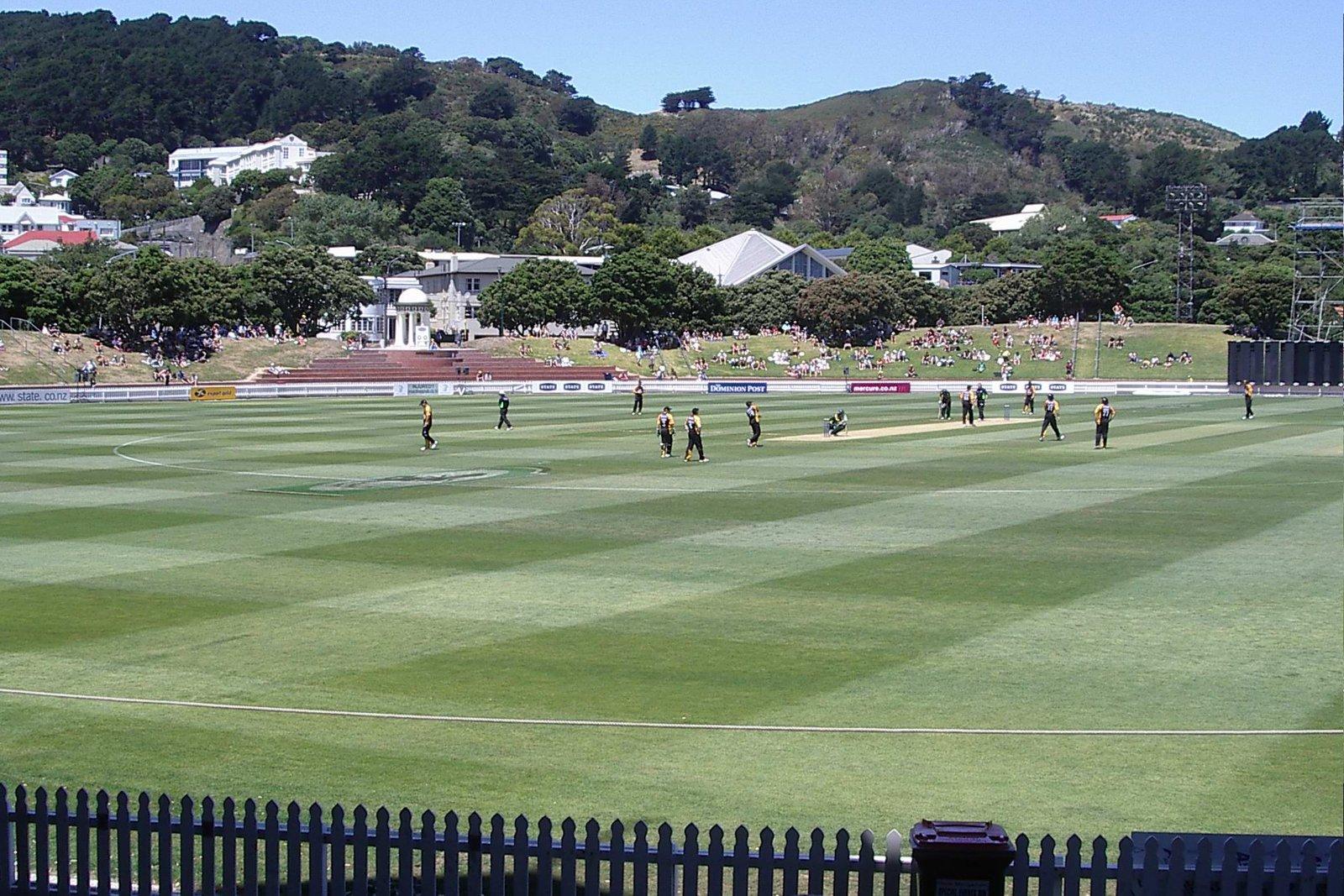
Image: File photo: a domestic Twenty20 match at the Basin Reserve, Wellington, January 2008; not from the 2026 Test. Image: Spawn Man, CC BY-SA 4.0 (https://creativecommons.org/licenses/by-sa/4.0/), via Wikimedia Commons (https://commons.wikimedia.org/wiki/File:Basin_Reserve_Firebirds_verse_Stags2.JPG); cropped and resized
About this article: prepared by The Daily Context editorial desk using automated, source-based reporting from the publications linked below. No reporter was on the ground.
Sources
- Cricbuzz, New Zealand vs India, 1st Test, live scores, result and commentary (23 November 2026): https://www.cricbuzz.com/live-cricket-scores/161285/nz-vs-ind-1st-test-india-tour-of-new-zealand-2026
- Sky Sports, New Zealand v India scorecard (23 November 2026): https://www.skysports.com/cricket/new-zealand-v-india/scorecard/275e8369-8fbb-5845-b00e-49b397481b6b
- ESPNcricinfo, day-four match report by Sidharth Monga (22 November 2026): https://www.cricinfo.com/series/india-in-new-zealand-2026-27-1539421/new-zealand-vs-india-1st-test-1539442/match-report
- AP, "India strikes twice before lunch, closes on victory over New Zealand in 1st cricket test" (23 November 2026): https://apnews.com/article/cricket-new-zealand-india-1st-test-day5-fa1baeacd923e34308a6ae18e0f65a4f
- Times of India, "Rishabh Pant's record 128 powers India to mammoth 720/9 declared" (23 November 2026): https://timesofindia.indiatimes.com/sports/cricket/india-vs-new-zealand/ind-vs-nz-1st-test-runs-records-and-resistance-rishabh-pants-record-128-powers-india-to-mammoth-720/9-declared/articleshow/136086146.cms
- ICC, "New Zealand captain reveals make-up of playing XI for India" (18 November 2026): https://www.icc-cricket.com/tournaments/world-test-championship/news/new-zealand-captain-reveals-make-up-of-playing-xi-for-india
- ESPN, New Zealand vs India 2nd Test match details: https://www.espn.com/cricket/series/24469/game/1539443/new-zealand-vs-india-2nd-test-24469
Kabeer Ahmad
Kabeer Ahmad is the founder and editor of The Daily Context. He oversees the site's source-based coverage of world affairs, technology, business, entertainment, lifestyle and sports, and is responsible for its editorial standards, sourcing and corrections.