Russian military-linked cargo ship Sparta II set ablaze by drones in Gulf of Finland, drifts into Finnish waters
A sanctioned Russian cargo ship linked to Moscow's defence ministry caught fire after a drone strike in the eastern Gulf of Finland on Saturday and drifted into Finnish waters. Finland's military says Ukraine was likely responsible; Kyiv has not claimed the attack.
Update, 22 November 2026 (around 3:30pm Pakistan time): The fire on Sparta II was still being fought on Sunday morning, more than 24 hours after the strike, and the Finnish Border Guard said crews had to take care that water used on the blaze did not make the ship unstable or cause it to sink. Details are in the new section "What is the latest on Sunday?" below.
A Russian cargo ship with links to Moscow's defence ministry was hit by drones and set on fire in the eastern Gulf of Finland on Saturday 21 November, then drifted into Finnish territorial waters, where Finnish authorities were still fighting the blaze late into the night. Finland's armed forces said Ukraine was likely behind the strike. Kyiv has not claimed responsibility.
The vessel, the Russian-flagged Sparta II, was bound for Russia's Baltic exclave of Kaliningrad. Its 16 crew members abandoned ship into lifeboats and were taken aboard a nearby Russian vessel heading back to Russia, according to the Finnish Border Guard. No injuries were reported and, as of Saturday evening, Finnish and Estonian authorities said no pollution had been detected.
The incident is one of the most direct spillovers of the Russia-Ukraine war into the waters of a NATO member. "War is spilling over into our immediate vicinity," Finnish Prime Minister Petteri Orpo wrote on X, adding: "Ukraine has the right to fight back against the aggressor."
What happened to the Sparta II?
Finland's Defence Ministry said its forces detected a drone attack on a Russian merchant vessel on Saturday morning in international waters west of Suursaari, the island Russia calls Gogland. The Finnish coast guard told the BBC it was alerted at about 08:50 local time (06:50 GMT, 11:50 Pakistan time).
Russian officials gave their own account. Leningrad region governor Alexander Drozdenko said a Kaliningrad-bound cargo ship had been attacked by two drones about three nautical miles from Russia's border. Kaliningrad governor Alexei Besprozvannykh also said two drones had been used, based on preliminary information, and that there was "no threat" to supplies for the exclave.
Estonia's Police and Border Guard Board said it first received word of a fire and possible explosions at 09:35 local time, when the ship was in an international shipping lane about 11 nautical miles north of Estonia's Vaindloo island, inside Estonia's exclusive economic zone but in the area covered by the St Petersburg maritime rescue centre. An Estonian duty officer said the explosions set the ship's bridge on fire. Photographs released by the Finnish Border Guard show heavy smoke and damage to the bridge and to containers on deck.
Accounts of the exact position differ. Finland and Russia both describe the strike area as international waters, while Ilja Iljin of the Finnish Border Guard was quoted by the Kyiv Independent, citing Yle, as saying the ship was hit in Russian territorial waters. The ship lost steering, according to Iljin, and drifted north into Finnish waters off the town of Loviisa, where it was anchored. Estonia's navy commander, Ivo Vark, told Estonian TV3 that the ship was not sinking but its engines could not be used.
Who owns the ship and what was it carrying?
According to Reuters, citing LSEG data, Sparta II is a 121-metre Russian-flagged cargo ship that left St Petersburg on Friday. It is owned by Oboronlogistika, a shipping company that provides logistics services to Russia's Defence Ministry. The BBC reported that the company says on its website it was set up within the ministry's structure in 2011. The vessel has been under US sanctions since 2022 and was sanctioned by Ukraine this year.
The Kyiv Independent reported that the ship has previously carried Russian military equipment, including during Russia's withdrawal from Syria after the fall of Bashar al-Assad's government.
Finnish officials say they do not know what Sparta II was carrying on this voyage. "At the moment, there is no confirmed information about what cargo is on board, but it cannot be ruled out that there is military materiel on board," Iljin said. He told Yle that Russian authorities had not given a clear answer about the cargo and that rescuers were working on the assumption that explosive material could be aboard, keeping a safe distance.
Who is fighting the fire, and how long could it last?
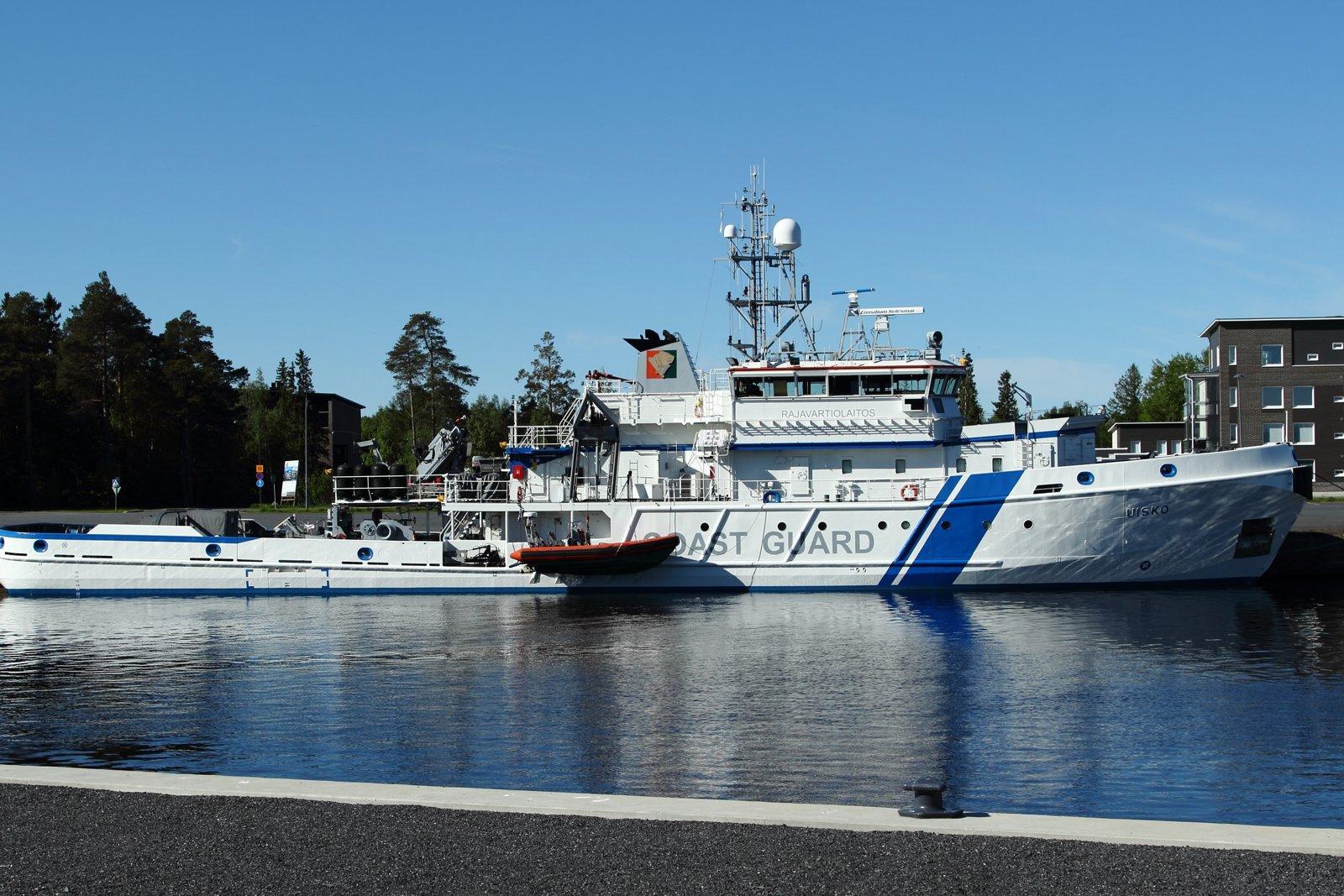
The Finnish Border Guard is leading the rescue operation because the ship is in Finnish waters. In a statement on Saturday evening, it said the patrol ship Uisko, patrol boats, a patrol aircraft and helicopters were involved, along with two civilian salvage tugs, Ajax and H. Kanter, and the Estonian navy ship Kindral Kurvits. At the Border Guard's request, the Russian rescue ship Murman also joined in. A restricted zone has been set up around the vessel.
Iljin told Yle on Saturday evening that open flames were still visible. The fire was no longer spreading but had not been put out, and it could burn for several days or even weeks. The Border Guard said the plan was to make it possible to tow the ship into Russia's area of responsibility, partly to protect the marine environment. Mikko Simola, commander of the Gulf of Finland coast guard district, said the Russian side's aim was to tow Sparta II home once rescue work was done. Finland's defence minister, Antti Häkkänen, had told Helsingin Sanomat the ship could be towed out of Finnish waters on Saturday night; the Border Guard said it would issue its next update on Sunday.
Environmental risk is a central concern in the shallow, crowded Gulf of Finland. Robin Häggblom of Risk Intelligence told Al Jazeera that the absence of ice so far this winter would make any oil-spill response easier.
How have Finland, its allies and Russia responded?
Finland notified its allies and NATO and imposed temporary air and sea traffic restrictions in the eastern Gulf of Finland. Finnish Defence Forces spokesperson Aki-Mauri Huhtinen said Ukraine was likely behind the attack but that it was not clear why the ship had been targeted.
Hours after the strike, Finland's Defence Ministry said a Russian helicopter was suspected of violating Finnish airspace near Loviisa, reaching about 4 kilometres into Finnish territory at 12:34 local time. Häkkänen said this may have been linked to rescue or tracking of the damaged ship. The Border Guard is investigating.
Sweden's defence minister, Pål Jonson, said Swedish combat aircraft under Finnish command took part in safeguarding Finnish and NATO territory after the incident. Yle, citing Estonian media, reported that Turkish and Belgian F-16s based in Estonia and Lithuania were also scrambled.
Finnish President Alexander Stubb called the events "serious" and said he had briefed key partners and allies. The Finnish parliament's defence committee is due to hear officials on Baltic Sea security on Tuesday morning, its chair Heikki Autto said. Estonia's prime minister, Kristen Michal, wrote that "the consequences of fighting Russia's aggression have reached the Baltic Sea" and that nothing would stop Estonia supporting Ukraine.
Ukraine's foreign ministry did not immediately respond to Reuters. Vladyslav Vlasiuk, President Volodymyr Zelensky's sanctions adviser, told the Kyiv Independent: "It seems that vessels sanctioned by Ukraine for systematically supporting Russia's military-industrial complex have a rather unfortunate tendency to catch fire." That is not a claim of responsibility. Russia has previously described attacks on its commercial ships outside its territorial waters as terrorism and piracy, Reuters noted. A Russian lawmaker, identified in a Lenta.ru headline only as deputy Novikov, said attacks on Russian ships "should not go unanswered".
Why does it matter?
The strike comes during a week of rising tension on NATO's eastern flank. On Friday, Poland said two Russian cruise missiles and a jet-powered drone had crashed on its territory during a large Russian air attack on Ukraine, and on Saturday NATO Secretary General Mark Rutte said in Warsaw that the alliance would defend "every inch" of Polish territory.
In the Baltic, Ukraine has stepped up long-range drone attacks on Russia's Leningrad region. Drozdenko said 80 drones were shot down over the region overnight into Saturday. Earlier this month, Finland's military reported detecting a strike on a Russian warship in the same part of the Gulf of Finland, which Ukraine said it carried out, and Helsinki later raised concerns with Kyiv about strikes in the area, Al Jazeera reported.
The Gulf of Finland is one of Europe's busiest shipping corridors. It links St Petersburg to the open Baltic and carries heavy ferry traffic between Helsinki and Tallinn. Any campaign against Russian ships there could raise risks for civilian shipping, the environment and the airspace of NATO members.
What is the latest on Sunday?
Firefighting and the cooling of containers on deck continued through Saturday night and were still under way on Sunday morning, according to the Finnish Border Guard and Yle. In a statement issued at 10:36 Finnish time (1:36pm in Pakistan) on Sunday 22 November, the Border Guard said it was leading the rescue resources at the scene, which included Estonian and Russian units, with the patrol ship Uisko coordinating.
The Border Guard said the ship's stability had to be taken into account: water was being used in a way that would not cause the vessel to lose stability or sink because of water collecting in the hull. It said it knew of no danger to other shipping in the area, and that its investigation into the suspected Russian helicopter airspace violation on Saturday was continuing.
Commander Joni Sjöberg, the officer in overall charge for the Gulf of Finland Coast Guard, told Yle that the evacuation of the crew had been completed, with the crew transferred to a Russian rescue vessel, and that once the fire was out the plan was to move the ship out of Finnish territorial waters. Yle reported that there was still no information about what the containers were carrying. The ship remained at anchor off Loviisa.
Both Finland's and Estonia's armed forces have said the drones that hit the ship were probably Ukrainian, Yle reported. Ukraine has not confirmed this.
What is still unclear, and what happens next?
Several points remain unconfirmed: who launched the drones and from where, what the ship was carrying, and exactly where it was when it was hit. Ukraine has not commented officially.
Next steps include putting out the fire, possibly towing the ship back into Russian-controlled waters, the Finnish Border Guard's investigation of the suspected helicopter airspace violation, and Tuesday's parliamentary defence committee hearing in Helsinki. The Daily Context will update this report if the cargo is identified or responsibility is confirmed.
Image: File photo (June 2015) of the Finnish Border Guard patrol ship VL Uisko, one of the vessels taking part in the Sparta II firefighting operation, moored in Oulu; not taken during the incident. Photo by Estormiz, CC0 (public domain dedication), via Wikimedia Commons (https://commons.wikimedia.org/wiki/File:Uisko_Oulu_20150614_01.JPG); cropped and resized
About this article: prepared by The Daily Context editorial desk using automated, source-based reporting from the publications linked below. No reporter was on the ground.
Sources
- Finnish Border Guard statement via ePressi (22 Nov 2026, Swedish): https://www.epressi.com/tiedotteet/turvallisuus/raddningsinsatserna-i-finska-viken-fortsatter-under-gransbevakningsvasendets-ledning.html
- Yle (22 Nov 2026, Finnish): https://yle.fi/a/74-20258314
- Kaleva / STT (22 Nov 2026, Finnish): https://www.kaleva.fi/rajavartiolaitos-sparta-ii-rahtilaivan-sammuttamis/13767328
- Reuters (21 Nov 2026): https://www.reuters.com/3fec1b0a85a0/world/russia-says-cargo-vessel-struck-by-drones-finland-says-it-is-fire-its-waters-2026-11-21/
- BBC News (21 Nov 2026): https://www.bbc.com/news/articles/cj752ddve27ko
- Finnish Border Guard statement via ePressi (21 Nov 2026, Finnish): https://www.epressi.com/tiedotteet/turvallisuus/rajavartiolaitos-jatkaa-pelastustoiminnan-johtamista-suomenlahdella..html
- Yle live updates (21 Nov 2026, Finnish): https://yle.fi/a/74-20258284/64-3-313863
- ERR News (21 Nov 2026): https://news.err.ee/1610202715/russian-cargo-ship-catches-fire-in-gulf-of-finland-moscow-claims-drone-hit
- Al Jazeera (21 Nov 2026): https://www.aljazeera.com/news/2026/11/21/russia-says-kaliningrad-bound-ship-struck-by-drones-in-gulf-of-finland
- Kyiv Independent (21 Nov 2026): https://kyivindependent.com/russian-military-linked-cargo-ship-catches-fire-after-reported-drone-strike-in-gulf-of-finland/
- Reuters world news summary via Devdiscourse (22 Nov 2026): https://www.devdiscourse.com/article/international/4010479-reuters-world-news-summary
- Lenta.ru (21 Nov 2026, Russian): https://lenta.ru/news/2026/11/21/v-rossii-otreagirovali-na-ataku-v-neytralnyh-vodah-sledovavshego-v-kaliningrad-sudna/
Kabeer Ahmad
Kabeer Ahmad is the founder and editor of The Daily Context. He oversees the site's source-based coverage of world affairs, technology, business, entertainment, lifestyle and sports, and is responsible for its editorial standards, sourcing and corrections.