Nikhil Gupta jailed for 19 years and seven months over plot to kill Sikh separatist Gurpatwant Singh Pannun in New York
A US federal judge in Manhattan has sentenced Indian national Nikhil Gupta to 235 months in prison for his part in a foiled plot to murder Sikh separatist leader Gurpatwant Singh Pannun in New York. US prosecutors say the plot was directed by an Indian government employee; India denies any involvement.
An Indian national who admitted trying to arrange the murder of a Sikh separatist leader in New York has been sentenced to 235 months, or 19 years and seven months, in a US federal prison.
Nikhil Gupta, 55, was sentenced on Friday, 20 November, by US District Judge Victor Marrero in Manhattan. He had pleaded guilty in February to murder-for-hire, conspiracy to commit murder-for-hire and conspiracy to commit money laundering. The target was Gurpatwant Singh Pannun, a lawyer and a leading campaigner for Khalistan, a proposed independent Sikh state carved out of India's Punjab.
US prosecutors say the plot was directed in 2023 by Vikash Yadav, who they say was then an Indian government employee working in the Cabinet Secretariat, the part of government that houses India's foreign intelligence service, the Research and Analysis Wing. Yadav is charged in the same case but is not in US custody. India has denied any government involvement.
What did the judge decide?
Judge Marrero imposed the 235-month term after a hearing of roughly 80 minutes, calling the sentence "reasonable and appropriate" given the nature of the crime, according to the Press Trust of India, whose report was carried by The Hindu. Prosecutors from the US Attorney's Office for the Southern District of New York had asked for about 24 years, Reuters reported.
The judge did not order a period of supervised release. He said Gupta is likely to face deportation or removal proceedings once he has served his prison term. Gupta's lawyers said after the hearing that they were disappointed and had hoped for a shorter sentence.
"Today's prison sentence reflects the seriousness of Nikhil Gupta's conduct and should serve as a clear warning," US Attorney Jamie McDonald said in a Justice Department statement. He said Gupta had planned the killing from India "believing he was beyond the reach of a US court".
Prosecutor Ashley Nicolas told the court the case "cuts to the very core of American values", Reuters reported.
What did Gupta and Pannun say in court?
Gupta apologised in a statement of about six minutes, delivered in English. "I cannot undo what I have done. I am sorry to Pannun, to the community and the fraternity," he said, according to PTI. Reuters quoted him as saying he regretted straying from the non-violent example of Mahatma Gandhi, and that he was sorry to "the communities I hurt" and to his own family. He told the court his wife, mother and children were being punished for something they had not done.
Pannun, who was in the courtroom with members of the Sikh community, spoke for about 20 minutes. He said he had been unable to practise law normally for more than 1,200 days since the threat came to light and has lived with a security detail throughout. In a written victim impact statement quoted by CBS News, he said intelligence agencies in several countries had warned him the threat "remains active", and that "the hardest question I face is whether someone else could be harmed just because they were around me."
He told the court that "self-determination for my people and my homeland, Punjab, is my lifetime goal", Reuters reported. In his written statement, quoted by the BBC, he said he was "entirely willing to take India's bullets" if that was the price of his cause.
Gupta's lawyer, Isabelle Kirshner, argued that he was "not the brains behind this operation", DW reported, citing the Associated Press.
How did the plot work?
According to the Justice Department, Yadav recruited Gupta in or around May 2023. Gupta, who described himself in messages as an international narcotics and weapons trafficker, approached a man he believed to be a criminal contact to find a hitman. That contact was in fact a confidential source working with the US Drug Enforcement Administration (DEA), and the "hitman" he introduced was an undercover DEA officer.
Prosecutors say Yadav agreed, through Gupta, to pay $100,000 for the killing. On or about 9 June 2023 an associate delivered $15,000 in cash to the undercover officer in New York as an advance. Yadav then passed Gupta Pannun's home address, phone numbers and details of his daily routine, and Gupta forwarded them to the undercover officer along with surveillance photographs.
Gupta urged the "hitman" to act quickly, but told him not to carry out the killing around the time of Indian Prime Minister Narendra Modi's state visit to the United States, which began on about 20 June 2023, the department said.
Why does the Nijjar killing in Canada matter here?
On 18 June 2023, two days before that state visit, masked gunmen shot dead Hardeep Singh Nijjar outside a Sikh temple in Surrey, British Columbia. Nijjar was an associate of Pannun and another prominent Khalistan campaigner.
The next day, according to prosecutors, Gupta told the undercover officer that Nijjar "was also the target" and "we have so many targets", and said there was "now no need to wait" to kill Pannun. In September 2023 Canada's then prime minister, Justin Trudeau, said there were "credible allegations potentially linking" India to Nijjar's murder. India rejected that, and the dispute led both countries to expel diplomats.
Gupta's defence denied that he had any role in Nijjar's killing or in any other assassination attempt, the AP reported.
What has India said?
India has consistently denied involvement. After the US first unsealed charges in November 2023, the Ministry of External Affairs called the allegations a matter of concern and said such conduct was contrary to government policy. It set up an inquiry committee. In January 2025 the Home Ministry said the committee had recommended legal action against an individual with past criminal links, without naming him, NDTV Profit reported. The ministry has also said the man named in the US indictment no longer works for the government.
India regards Pannun as a terrorist and has banned his organisation, Sikhs for Justice, since 2019. Pannun denies the terrorism accusations and says he is a political activist. He holds US citizenship; Reuters describes him as a dual US-Canadian citizen.
Gupta was arrested in Prague, in the Czech Republic, on 30 June 2023 at the request of the United States, and was extradited in June 2024.
What happens next?
Gupta will serve his sentence in the US federal prison system and then faces removal proceedings. Yadav remains charged in the second superseding indictment. The Justice Department says he has not been arrested, and CBS News reports that he is in India. It is unclear whether he has hired a defence lawyer, according to Reuters.
The case also continues to shadow India's relations with the United States and Canada. Pannun is pursuing a separate civil lawsuit in a US court against India's National Security Adviser Ajit Doval and former intelligence chief Samant Goel. NDTV Profit reported that a US court ordered on 13 November that summonses be sent to the two men through the judicial authorities in Delhi, and that India's foreign ministry again dismissed the case as baseless. Indian officials have previously called the allegations against senior officials "fabricated and malicious".
For Sikh separatist activists in North America, the sentence was a rare moment of legal accountability. Narinder Singh Randhawa, who succeeded Nijjar as a temple leader in Surrey, told the BBC it was the "first time we see justice". New Delhi maintains that it played no part.
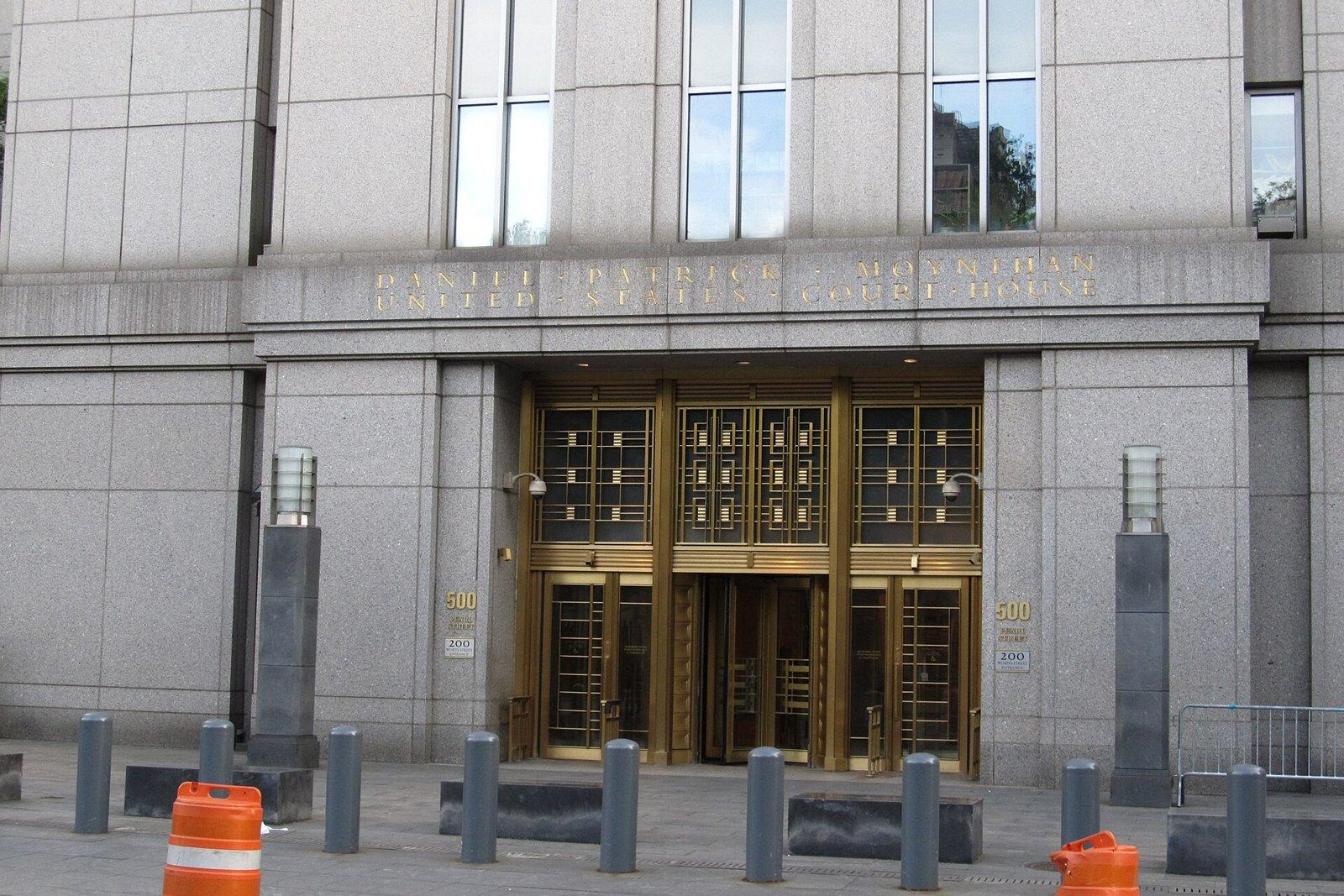
Image: File photo (May 2012) of the Daniel Patrick Moynihan US Courthouse, home of the federal court for the Southern District of New York; not taken at the sentencing. Photo by Ken Lund, CC BY-SA 2.0 (https://creativecommons.org/licenses/by-sa/2.0), via Wikimedia Commons (https://commons.wikimedia.org/wiki/File:Daniel_Patrick_Moynihan_U.S._Courthouse,_Manhattan,_New_York_(7237347688).jpg); cropped and resized
About this article: prepared by The Daily Context editorial desk using automated, source-based reporting from the publications linked below. No reporter was on the ground.
Sources
- US Department of Justice, Office of Public Affairs: Indian National Sentenced to Over 19 Years in Prison for Plotting to Assassinate U.S. Citizen In New York City (20 Nov 2026): https://www.justice.gov/opa/pr/indian-national-sentenced-over-19-years-prison-plotting-assassinate-us-citizen-new-york-city
- The Guardian (Reuters): Indian man sentenced to 19 years in prison for conspiring to kill Sikh separatist in New York: https://www.theguardian.com/us-news/2026/nov/20/indian-man-sentenced-prison-murder-plot-sikh-separatist
- BBC News: Indian man sentenced to 19-plus years in plot to assassinate US-based Sikh separatist leader: https://www.bbc.com/news/articles/cq702ez8d4lwo
- The Hindu (PTI): U.S. court sentences Indian national Nikhil Gupta to 235 months in jail in Pannun murder plot: https://www.thehindu.com/news/national/us-court-sentences-indian-national-nikhil-gupta-to-235-months-in-jail-in-murder-for-hire-plot/article71725795.ece
- CBS News: Man who plotted to assassinate Sikh political dissident in NYC is sentenced to more than 19 years in prison: https://www.cbsnews.com/news/plot-assassinate-sikh-dissident-nyc-prison-sentence/
- DW: US judge jails Indian national in foiled Sikh separatist murder plot: https://www.dw.com/en/us-judge-jails-indian-national-in-foiled-sikh-separatist-murder-plot/live-80008104
- NDTV Profit: Indian national Nikhil Gupta gets nearly 20 years in US jail: https://www.ndtvprofit.com/world/indian-national-nikhil-gupta-gets-nearly-20-years-in-us-jail-over-khalistani-terrorist-gurpatwant-pannun-murder-plot-12356281
- Associated Press: Man gets 19½ years in prison for plot to kill Sikh separatist leader in New York: https://apnews.com/article/india-modi-sikh-pannun-assassination-862cf5a608b00694f2cc661ece763134
Kabeer Ahmad
Kabeer Ahmad is the founder and editor of The Daily Context. He oversees the site's source-based coverage of world affairs, technology, business, entertainment, lifestyle and sports, and is responsible for its editorial standards, sourcing and corrections.