Golden Horse Awards 2026: Hong Kong's We Are Born Good wins best film as Shu Qi takes best new director
Hong Kong drama We Are Born Good won best narrative feature at the 63rd Golden Horse Awards in Taipei on Sunday 22 November 2026. Liu Kuan-ting and Angela Yuen took the leading acting prizes, and Shu Qi won best new director for her debut feature, Girl.
The Hong Kong drama We Are Born Good won best narrative feature, the top prize, at the 63rd Golden Horse Awards in Taipei on Sunday 22 November 2026. Taiwanese actor Liu Kuan-ting won best leading actor for the wedding comedy-drama Double Happiness, Hong Kong actress Angela Yuen won best leading actress for Afterpiece, and actress Shu Qi won best new director for her first feature as a director, Girl.
The Golden Horse Awards, held each year in Taiwan, are the most prestigious prizes for Chinese-language cinema and are often compared to the Oscars. This year's results spread the main awards across Hong Kong, Taiwan, Singapore and Malaysia rather than handing a sweep to one film.
Who won the main awards at the 2026 Golden Horse Awards?
The ceremony at the Taipei Music Center was hosted by Hong Kong actor Will Or, and a 15-member jury was chaired by the veteran Taiwanese actress and director Sylvia Chang. The headline winners were:
- Best narrative feature: We Are Born Good (Hong Kong)
- Best director: Joseph Hsu Chen-chieh, Double Happiness
- Best leading actor: Liu Kuan-ting, Double Happiness
- Best leading actress: Angela Yuen, Afterpiece
- Best supporting actor: Anson Kong, We're Nothing at All
- Best supporting actress: Judy Ongg, Sunshine Women's Choir
- Best new director: Shu Qi, Girl
- Best new performer: Nandagopall Mohan, Sayang
- Best original screenplay: Yeung Leung-chuen and Thomas, We Are Born Good
- Best adapted screenplay: Ervin Han and Jordan Katherine See, The Violinist
- Best animated feature: The Violinist
- Best documentary feature: Scenes from Departure, directed by Chan Kam-hei
Double Happiness and Kung Fu were the most decorated films, with three competitive awards each. Double Happiness won best director, best leading actor and best film editing (Chen Chun-hung), and had already received the audience choice award announced on 21 November. Kung Fu won best action choreography, best visual effects and best makeup and costume design.
Sabu's Arrested Memory, which led the field with 11 nominations when the shortlist was announced on 1 October, won two awards: best art direction and best sound effects, the latter shared by the veteran sound designer Tu Duu-chih and his son Patrick Tu.
What is We Are Born Good about?
We Are Born Good is the first feature by Hong Kong director Yeung Leung-chuen, who also shared the original screenplay award with co-writer Thomas. According to the festival-focused site Asian Movie Pulse, the film follows a former prisoner trying to start again as a café owner and a struggling aspiring actress whose lives collide after a misunderstanding over a food order. It went into the night with nine nominations.
The win capped a strong night for Hong Kong, which also took the leading actress prize through Angela Yuen and the supporting actor prize through Anson Kong, a member of the popular Hong Kong boy band Mirror.
Why did Shu Qi's award draw so much attention?
Shu Qi, one of the best-known actresses in Chinese-language cinema, won best new director for Girl, a coming-of-age drama set in the Taiwanese port city of Keelung in 1988. She received the award from directors Ang Lee and Bong Joon-ho, according to Singapore's Lianhe Zaobao.
In an emotional speech, she apologised to her fellow nominees, noting that she had moved into directing after more than 30 years as an actress, and thanked director Hou Hsiao-hsien, with whom she made films including The Assassin. "Without him, there would be no Girl," she said, according to Lianhe Zaobao's translation. Girl had already won the FIPRESCI international critics' prize at the festival.
What other stories stood out?
Judy Ongg, 76, won best supporting actress for the Taiwanese box-office hit Sunshine Women's Choir. Lianhe Zaobao reported it was her first Golden Horse award in 54 years, after she won best leading actress in 1972.
Liu Kuan-ting, 38, won his first leading actor prize on his second nomination in the category; Lianhe Zaobao noted he had previously won two supporting actor awards. In Double Happiness he plays a hotel chef whose divorced parents each insist on hosting his wedding, forcing him and his fiancée to stage two ceremonies at the same hotel half an hour apart. "If you're an actor, hold your head up high," he told the audience, according to the Taipei Times.
Angela Yuen won her first Golden Horse on her second nomination, beating a field that included Singapore's Yeo Yann Yann, a previous winner.
Singapore left with three awards from 15 nominations across five films. The animated film The Violinist won best animated feature and best adapted screenplay, and Anthony Chen's We Are All Strangers won best original film score for Kin Leonn and Thomas Foguenne. Malaysian actor Nandagopall Mohan won best new performer for playing a deaf, non-speaking teenager in Sayang. Taiwanese auteur Tsai Ming-liang won best documentary short for Night Journey.
Veteran Taiwanese director Yu Kan-ping received the lifetime achievement award, and Moya Chou was named outstanding Taiwanese filmmaker of the year.
Why do the Golden Horse Awards matter?
The awards are open to Chinese-language films from Taiwan, Hong Kong, mainland China, Southeast Asia and elsewhere, which makes them a showcase for directors working outside the large mainland Chinese industry. Mainland Chinese films and stars have stayed away since 2019, when Beijing barred participation, so in recent years Hong Kong, Taiwanese, Singaporean and Malaysian productions have dominated the shortlists. This year's results reflect that pattern.
For international audiences, Golden Horse winners often go on to festival runs and streaming releases. Release plans outside Asia for this year's winners had not been announced in the sources reviewed for this article.
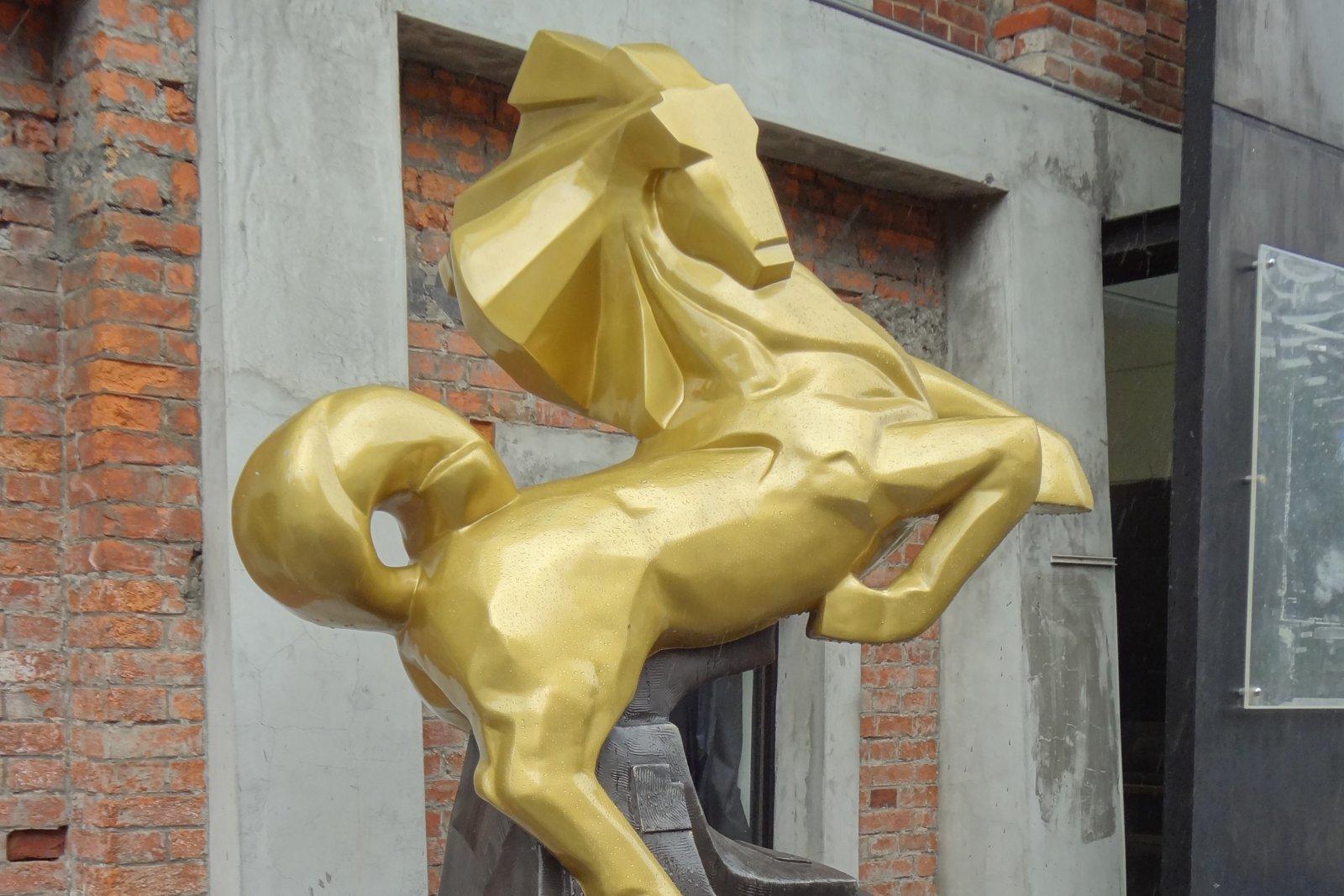
Image: File photo: a Golden Horse Awards trophy sculpture on display at Taipei Cinema Park, November 2018; not from the 2026 ceremony. Image: Solomon203, CC BY-SA 4.0 (https://creativecommons.org/licenses/by-sa/4.0/), via Wikimedia Commons (https://commons.wikimedia.org/wiki/File:Golden_Horse_Awards_trophy_sample_in_Taipei_Cinema_Park_20181117a.jpg); rotated, cropped and resized
About this article: prepared by The Daily Context editorial desk using automated, source-based reporting from the publications linked below. No reporter was on the ground.
Sources
- Taipei Times (with CNA), "Liu Kuan-ting, Shu Qi among winners at Golden Horse Awards" (23 November 2026): https://www.taipeitimes.com/News/taiwan/archives/2026/11/23/2003868231
- TTV News, full list of winners at the 63rd Golden Horse Awards (22 November 2026, Chinese): https://news.ttv.com.tw/news/11511220003200W
- Lianhe Zaobao, "Golden Horse 63: Singapore films win three awards from 15 nominations" (23 November 2026): https://www.zaobao.com.sg/en/entertainment/golden-horse-63-singapore-films-win-three-awards-15-nominations-violinist-takes-two
- Asian Movie Pulse, "Golden Horse Awards 2026: Complete List of Winners" (22 November 2026): https://asianmoviepulse.com/2026/11/golden-horse-awards-2026-winners/
- Wikipedia, "63rd Golden Horse Awards" (nominee lists and jury, checked 23 November 2026): https://en.wikipedia.org/wiki/63rd_Golden_Horse_Awards
Kabeer Ahmad
Kabeer Ahmad is the founder and editor of The Daily Context. He oversees the site's source-based coverage of world affairs, technology, business, entertainment, lifestyle and sports, and is responsible for its editorial standards, sourcing and corrections.