Democrats clinch at least 258 House seats, their largest majority since 1992
US Democrats have won at least 258 of the 435 seats in the House of Representatives, their biggest haul since 1992, after Chuck Hubbard unseated Republican Virginia Foxx in North Carolina on Sunday 22 November 2026. With a 56-44 Senate majority as well, they will control both chambers of Congress from January while Donald Trump remains president.
Democrats have won at least 258 seats in the 435-member US House of Representatives, their best result since 1992. The tally was reached on Sunday 22 November 2026, when Democrat Chuck Hubbard was declared the winner over Republican Representative Virginia Foxx in North Carolina's 5th District after a recount. Republicans are assured of at least 173 seats, and four races are still undecided.
Democrats also won a 56-44 majority in the Senate earlier this month. That means they will control both chambers of Congress when the 120th Congress is sworn in on 3 January 2027, while President Donald Trump has two years left in the White House.
What happened in North Carolina?
The Associated Press called the North Carolina 5th District race for Hubbard on Sunday. It was one of the closest contests of the midterms. The BBC said Hubbard won by 330 votes with 99% of the vote counted, and ABC News put the result at 48.7% to 48.6%.
Foxx, who has represented the district since 2005 and chairs the powerful House Rules Committee, asked for a recount. North Carolina law allows one when the margin is 1% or less. After the recount failed to close the gap, she conceded. In a statement quoted by ABC News, she said she had called Hubbard "to congratulate" him and sent "my best wishes as he represents this wonderful district in the 120th Congress".
Hubbard, a former local journalist, had lost to Foxx in 2024 by about nine percentage points, according to the BBC. The Washington Post noted that the Cook Political Report had rated the seat "likely Republican". On social media, Hubbard thanked Foxx for "her decades of service" and said she had "graciously conceded following the results of the recount process".
North Carolina was also a Senate win for Democrats this year. ABC News reported that former governor Roy Cooper flipped the seat held by retiring Republican Senator Thom Tillis.
How big is the Democratic majority?
Democrats have gained 44 House seats so far, according to the AP's count as reported by The Independent and India Today. That is four more than the 40 seats they gained in Trump's first midterm election in 2018.
The total of 258 matches the number Democrats won in 1992, when Bill Clinton was first elected president. It tops the 257 seats they won in 2008, when Barack Obama was elected. It is still well below the Franklin D. Roosevelt era, when Democratic majorities went past 300 seats.
To pass a bill, a party needs 218 votes. With at least 258 members, Democrats could lose dozens of their own lawmakers on a vote and still pass legislation without Republican support. For comparison, House Speaker Mike Johnson has spent the past two years managing a 218-214 Republican majority, in which a handful of rebels could block the party's plans.
For Republicans, at least 173 seats would be one of their lowest totals in decades. The Independent compared it with the 247 seats House Republicans won in 2014 and the 230 they won in 1994.
Which races are still uncalled?
The BBC said four House races were still undecided as of Sunday:
- Tennessee's 4th District, where Democrat Victoria Broderick leads by fewer than 300 votes.
- Minnesota's 1st District, where Democrat Jake Johnson leads by fewer than 500 votes.
- Two seats in Louisiana, which go to runoff elections in December.
If Democrats win the Tennessee and Minnesota races, their total would rise above 258. The final figure depends on those counts and on the Louisiana runoffs.
Why did Democrats win so many seats?
Several outlets link the result to voters' anger over the cost of living. The BBC said Hubbard, like many Democratic candidates, campaigned on rising prices during the US war with Iran, which it described as a top issue for voters. It added that Trump and Vice-President JD Vance have both suggested that war-related inflation was probably to blame for the Republican losses.
The Guardian reported that voters "soured on Trump's handling of the economy, immigration and the war with Iran". The Independent also cited concerns about corruption.
Democrats won seats in places that usually vote Republican. The BBC listed victories in deeply Republican districts in South Carolina, Texas, Alaska and Iowa. In the Senate, the Guardian said the new Democratic caucus will include senators from states that had not elected a Democrat in decades, such as Texas, South Carolina and Mississippi. Mary Peltola's victory over Republican Dan Sullivan in Alaska, confirmed on 17 November, gave the party its 56th seat.
What do Democrats plan to do with their majority?
Democratic leaders say they will pursue both new laws and oversight of the administration. According to The Independent and India Today, both citing AP reporting, the party is preparing a 100-day agenda focused on living costs. It includes early votes to reverse Republican cuts to Medicaid and restore expired Affordable Care Act tax credits.
Party leaders have also promised to use subpoena powers to investigate the Trump administration, including how the president and his family have grown wealthier since he returned to office. House Democratic leader Hakeem Jeffries, who is expected to become speaker, has not ruled out trying to impeach Trump for a third time, The Independent reported. If he is elected speaker on 3 January, Jeffries would be the first Black person to hold the post.
Democratic lawmakers do not all agree on priorities. Representative Alexandria Ocasio-Cortez called the result "a mandate for change". Representative Tom Suozzi of New York said the party should spend 75% of its time on affordability and 25% on accountability. Representative Jason Crow of Colorado said lawmakers should feel "a sense of urgency and pressure" to deliver.
The White House has warned Democrats about their planned investigations, claiming they may amount to "blatant criminality", The Independent reported. Congressional oversight is a standard function of Congress. Representative Jim Jordan of Ohio, chosen to lead House Republicans in the minority, said: "Over the next two years, House Republicans will fight for American families."
What are the limits on Democratic power?
Control of Congress does not give Democrats a free hand. Trump can veto bills, and overriding a veto needs a two-thirds majority in both chambers. Democrats do not have that without Republican help. The Guardian noted that soon after the election, Trump posted an image of a red cap with the word "VETO" on Truth Social.
In the Senate, 56 seats is also short of the 60 votes usually needed to overcome a filibuster, so most major bills will still need some Republican support. Senate Democrats also have a leadership contest to settle: Maryland Senator Chris Van Hollen is challenging Chuck Schumer for majority leader, with a closed-door caucus vote set for 1 December, according to the Guardian.
What happens next?
- December: the Louisiana runoffs and final counts in Tennessee and Minnesota will settle the exact size of the House majority.
- 1 December: Senate Democrats vote on their leader.
- 3 January 2027: the 120th Congress is sworn in, and the House votes for a speaker.
After that, the first test will be whether Democrats can pass their early health and cost-of-living measures, and what Trump does when those bills reach his desk.
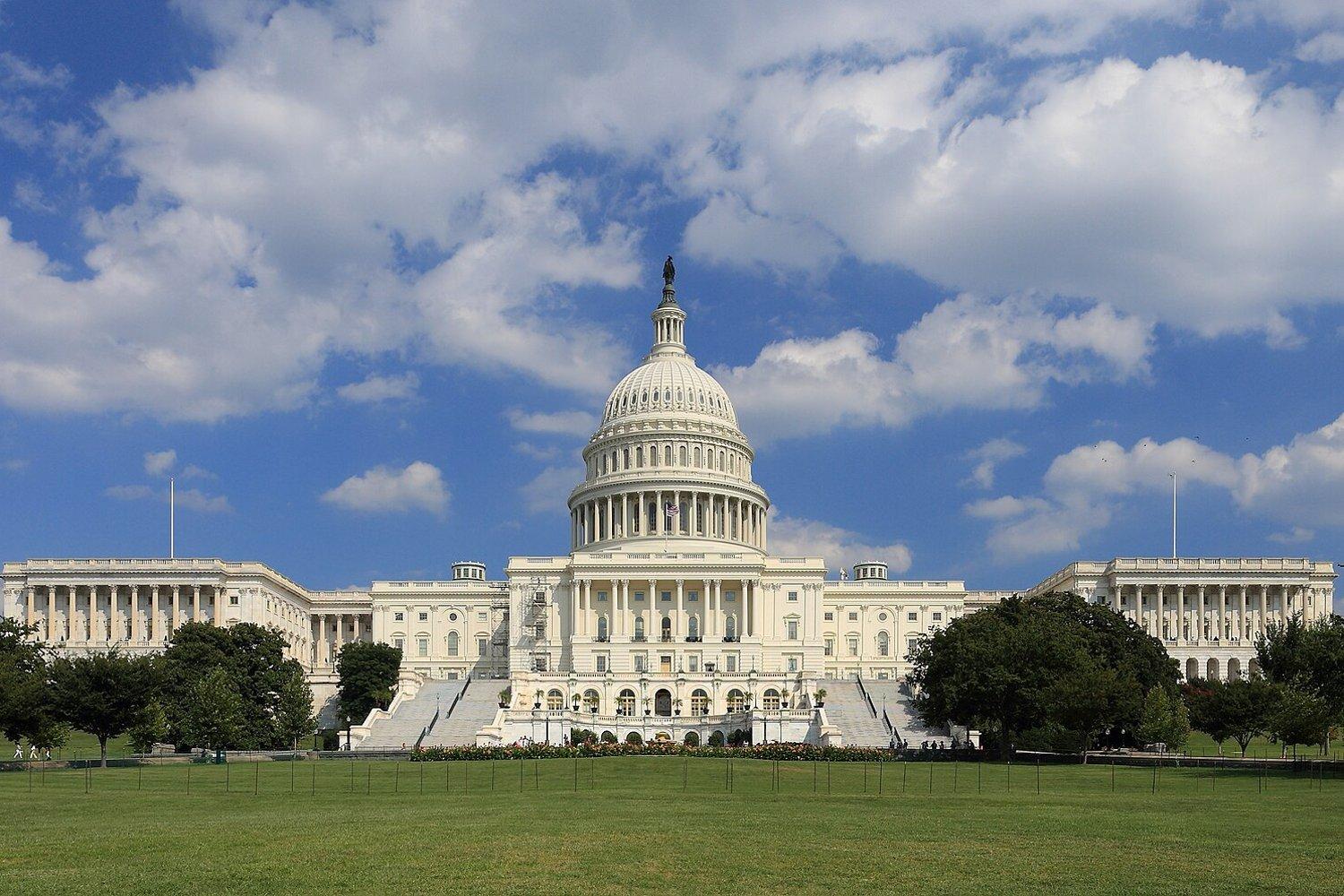
Image: File photo: the west side of the US Capitol, Washington, September 2013; not taken at the time of the 2026 results. Image: Martin Falbisoner, CC BY-SA 3.0 (https://creativecommons.org/licenses/by-sa/3.0/), via Wikimedia Commons (https://commons.wikimedia.org/wiki/File:US_Capitol_west_side.JPG); cropped and resized
About this article: prepared by The Daily Context editorial desk using automated, source-based reporting from the publications linked below. No reporter was on the ground.
Sources
- BBC News: Democrats win largest House majority since 1992 after flipping North Carolina seat (22 Nov 2026) https://www.bbc.com/news/articles/c6vg29g7dlyno
- ABC News: Democrat Chuck Hubbard wins recount in North Carolina US House race (22 Nov 2026) https://abcnews.com/Politics/democrat-chuck-hubbard-wins-recount-north-carolina-us/story?id=138362634
- The Washington Post: Democrat Chuck Hubbard defeats GOP incumbent in North Carolina House race (22 Nov 2026) https://www.washingtonpost.com/politics/2026/11/22/north-carolina-5th-house-district-election-results-2026-hubbard-defeats-foxx/
- The Independent (with AP reporting): Democrats seize historic House majority (22 Nov 2026) https://www.independent.co.uk/news/world/americas/us-politics/house-seats-democrats-historic-congress-b3089490.html
- India Today: US Democrats secure 258 House seats (23 Nov 2026) https://www.indiatoday.in/world/story/us-democrats-258-house-seats-100-day-agenda-trump-probes-3044681-2026-11-23
- The Guardian: 'A new day in the Senate': 56-44 majority gives Democrats fuel to take on Trump (19 Nov 2026) https://www.theguardian.com/us-news/2026/nov/19/democrats-senate-majority-midterms-trump
- AP: Democrats clinch a historic House majority of at least 258 seats (22 Nov 2026) https://apnews.com/article/democrats-house-majority-election-2026-congress-721096a4d9ba2cd68683692361798cdb
Kabeer Ahmad
Kabeer Ahmad is the founder and editor of The Daily Context. He oversees the site's source-based coverage of world affairs, technology, business, entertainment, lifestyle and sports, and is responsible for its editorial standards, sourcing and corrections.